
Authors: Emily Jagenburg, Bill Woodhams, Aghdas Movassaghi, Marquisha Myles MD, Alfred Bayaton, Drew Albert MD MBA
If you are aiming for a spot in orthopedic surgery, you’ve probably heard that research is a big deal. But what does that mean for a medical student? Here is the breakdown.
Quality > Quantity
The numbers can be intimidating. The average orthopedic surgery applicant had, on average, 8 research experiences and 23 combined publications, presentations, or abstracts. But don’t get lost in the stats.
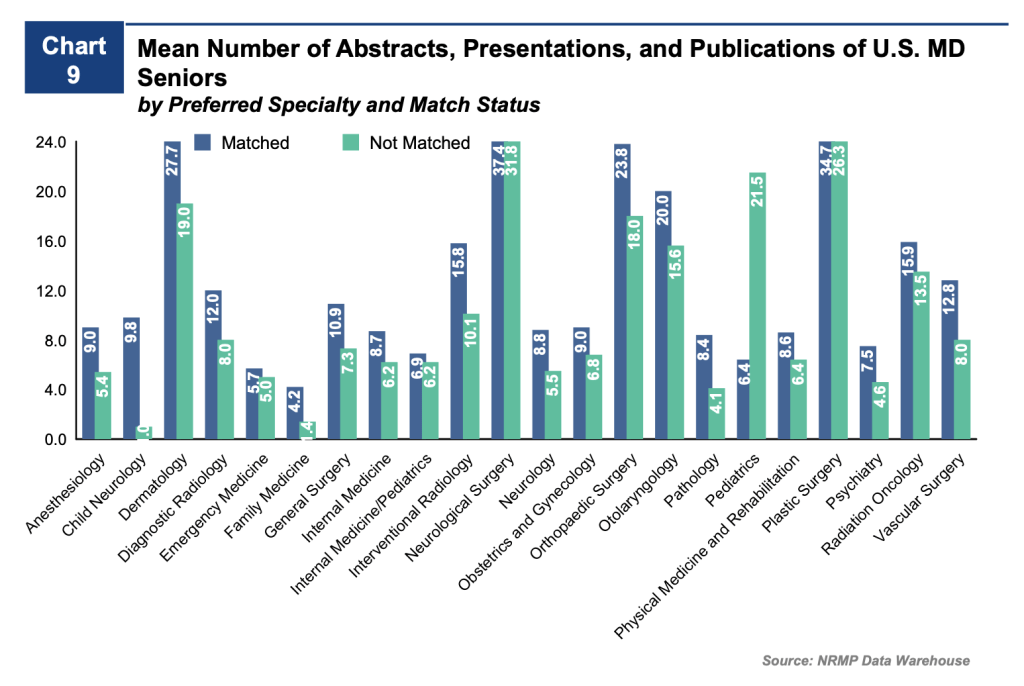
Most programs care far more about meaningful research than hitting national averages. It’s not about padding your CV, it’s about being able to talk passionately and intelligently about the work you’ve done – and yes you can and should expect to be asked about your projects and publications during interviews. Research can often be your foot in the door for an interview or an away rotation. It is also one of the best ways to connect with a surgeon to earn a letter of recommendation and find meaningful mentorship over the long term.
Make your Research Count
First-author status, podium presentations at regional/national conferences, coordinating multi-institutional IRB-approved studies, or anything tied directly to orthopedic subspecialties will stand out.
While medical students aren’t expected to produce ground-breaking research, what matters most is demonstrating that you can take a research project from initiation to completion. **It is actually a sign of grit, one of the most important factors in ortho resident success.4 Program Directors want to see that you have engaged in your research meaningfully. If you can communicate your passion for the project and tie it back to your passion for orthopedic surgery, it can leave a lasting impression.
Start Early and Stick with it
Getting involved in MS1 or early MS2 gives you time to learn, grow, and follow through.
Pro tip: Most med students disappear once the project slows down. Be the exception. Projects often stall or get stuck in revisions. Your willingness to finish what you started will set you apart.
Research can move slowly (RCTs, meta-analyses, and chart reviews can take months, some years). It is more common than not to think you are done with a manuscript, and then receive pages of edits from co-authors and journals. Seeing a project to completion shows commitment to the field and will shine through on your application!
Another thing: Surgeons are BUSY. Being able to recognize that is huge. By giving yourself enough time by starting early, you are also giving them time to read the manuscript, provide their edits, etc. Sometimes this can take anywhere from months to years. Practicing patience is a huge part of the game as well. They want you to succeed, and obviously believe in the projects, but are often juggling life at clinic, surgery, family and academic responsibilities including research. You can be the squeaky wheel and help them get your project forward by asking to set up a meeting to discuss the manuscripts/project progress but also recognize they are humans just like us.
How to get involved
When approaching residents, fellows, and attending physicians for research, be thoughtful in your approach. Cold-emailing someone asking to collaborate on a double-blind RCT right off the bat can be off-putting and unrealistic. It is much better to build a relationship first. If research comes up naturally in conversation, that may be a good time to mention any skills or value you could contribute to a project (eg. SPSS, running t-tests or regressions, or being highly organized). Just make sure you’re honest about your abilities, and back it up with something concrete like a spreadsheet from a systematic review, poster, or past publication.
Also, do your own research on attending physicians ahead of time to ensure that they are consistently publishing projects. Look them up in PubMed. Know their projects well before contacting them. This shows maturity and genuine interest. Review how many papers they have published in recent years and if they aren’t already publishing consistently every year, then it might not be a good fit. Also, ask residents, fellows, and other med students about who would be an ideal research mentor.
Additionally, many medical schools offer structured programs that connect students with faculty and residents who are actively seeking research collaborators. Participating in these initiatives is an excellent way to get your foot in the door, demonstrate your work ethic and proficiency, and build relationships that can lead to future opportunities. By engaging early, you’ll not only gain valuable experience but also establish a professional network you can leverage later in your training and career.
One of the most efficient approaches to getting involved in research during the demanding years of medical school is to pursue retrospective projects under the guidance of an established resident, professor, or attending physician. These mentors can teach you the methodologies and data-analysis techniques required for chart reviews and retrospective studies, allowing you to contribute meaningfully without the time commitment of a prospective trial. This type of work often fits more seamlessly into a busy clinical schedule and still provides the chance to develop critical research skills.
When you are working to establish a research relationship, ask them questions about if they would welcome you to shadow in their clinic and possibly OR. This is the best case scenario because they can teach you on both clinical and research side of things. When you get done early with med school responsibilities, you should jump into clinic. When you have holidays off, you should jump into full OR days because chances are that they are not taking time off. Work like an ortho resident/ attending if you want to be apart of that world.
Pro Tip: Surgeons LOVE initiative. Of course, within reason but if you are wanting to approach a surgeon about a potential research project (such as a systematic review of some sort), do the work ahead of time, ask yourself, “What question do I want to explore?”, “Is this valuable? What does this add to the literature?” Perform an initial brief literature search, and draft up a one page protocol. More often than not, that will be the thing that gets you the green light for your project. It takes the pressure off of them if you’ve done all the leg work ahead of time.
Research Pathways
Since we briefly discussed all these different kinds of studies let’s do a quick run-through of the different types you might want to explore from easiest to conduct to probably more resource-intensive:
- Systematic reviews/meta-analyses: Great entry point, faster turnaround, lets you learn literature. Using platforms like Rayyan (free) or Covidence (often provided through your institution) makes the process much easier by streamlining abstract screening, duplicate removal, and tracking reviewer decisions. Getting comfortable with these tools shows you can contribute right away and adds real value to a research team.
- Retrospective chart reviews: Learn data extraction and analysis, fit well into med school schedules, and help you learn how to navigate the EMR and understand what surgeons focus on in patient data. Large databases like TriNetX and PearlDiver can also provide direct access to de-identified patient data for broader research questions.
- Prospective studies/clinical trials: More time-intensive but highly impressive if followed through. Big ups if you are able to also get a research grant for your project (there are lots available). Survey studies: Pro easy. Con about a 30% response rate usually so be aware.
- Biomechanical/cadaveric studies: Great if you have access to a lab, often generate abstracts/posters quickly.
Leverage Free Tools and Databases
Finding the right opportunity just got easier: Ortho Research Fellowship Database by Ortho Conditioning is a curated, up-to-date list of ortho research fellowships open to med students, no fluff, just actionable leads.
Explore programs that match your interests, availability, and long-term goals. It is one of the best tools to start making connections and building your research track record.
Open Evidence is a large language model built for finding research studies on specific text prompts and questions. Check it out here: https://www.openevidence.com. Beware ensure there are no hallucinations in references (this tool does a much better job than chatGPT), and do not use AI and LLMs to write for you. Always double check the data for yourself, and use this tool to help you search for papers more effectively.
Final Thoughts
Ultimately, research is your chance to show that you’re committed, curious, and able to see things through. If you can share your genuine excitement for a project and tie it back to why you want to be an orthopedic surgeon, you will stand out to program directors.
Summary:
- Quality over quantity
- Average ortho applicant: ~8 research experiences & ~23 abstracts/publications/presentations.
- Programs value meaningful, completed projects over chasing high numbers.
- Passion and ability to discuss your work > raw stats on a CV.
- Why research matters
- Opens doors for interviews and away rotations.
- Builds relationships with surgeons → mentorship & strong letters of recommendation.
- Shows grit: taking a project from start to finish demonstrates persistence.
- What stands out
- First-author papers, podium presentations, and ortho-related projects.
- Ability to tie your research experience back to your interest in orthopedics.
- When to start
- Best to begin in MS1 or early MS2.
- Stick with projects—most students drop off once things slow down.
- Finishing projects (even after delays/revisions) sets you apart.
- How to get involved
- Build relationships before asking to join big projects.
- Be upfront and honest about your skills (SPSS, data analysis, organization).
- Research mentors first (PubMed, track record of publications).
- Ask residents and fellows who the best research mentors are.
- Consider structured programs at your med school for faculty-resident projects.
- Retrospective studies and chart reviews are efficient ways to contribute while learning research methods.
- Extra opportunities
- Combine research involvement with clinical shadowing/OR exposure when possible.
- Use downtime (holidays, light weeks) to work like a resident alongside mentors.
- Leverage resources
- Ortho Research Fellowship Database → curated list of opportunities to connect with active ortho research teams.
- Final takeaway
- Research shows commitment, curiosity, and perseverance.
- What matters most: finish what you start, talk passionately about your projects, and connect your work to your journey toward orthopedic surgery.
References
- National Resident Matching Program. Charting Outcomes in the Match: U.S. Allopathic Seniors, 2022. Washington, DC: National Resident Matching Program; 2022.
- Bernstein J, et al. The importance of research in orthopedic surgery residency selection. J Bone Joint Surg Am. 2019;101(5):e20.
- American Academy of Orthopaedic Surgeons. Orthopaedic Residency Program Directors’ Perspectives on Applicant Selection. JAAOS. 2021;29(8):e382-e389.
- Gosnell GG, Pareek A, Gould HP, et al. Higher Grit Scores Are Associated With Greater Scholarly Productivity Among Orthopaedic Surgery Residents. J Am Acad Orthop Surg Glob Res Rev. 2024;8(10):e24.00028. Published 2024 Oct 23. doi:10.5435/JAAOSGlobal-D-24-00028


